Pages

Showing posts with label Reading. Show all posts

Tuesday, 29 June 2021

Dawn Raid- Explanation text

 Title: Dawn Raids


What are Dawn aids? Getting dawn raided is when police come

rushing into your house early in the morning. Most people

believe that the police are being “RACIST” because the

police mostly arrest polynesian people and also black people

(African American people). But what do they want?

The police think that these polynesian/African people are OVERSTAYERS, so once they come into people’s houses the

first thing they want to see is their paperwork and passports!

If you didn’t have them then the police would arrest them

until their family shows the paperwork/passports to the

police to release that person. 


PACIFIC PEOPLE MIGRATION TO NZ

In the 1970’s New Zealand invited people from the

south pacific to come live in NZ to meet the demand

for cheap labour. People came from all over, including

Tonga, Samoa and Fiji and Realm countries like

Niue and the Cook Islands. It was advertised as the land of

milk and honey- lots of jobs, better education, and better healthcare. When they migrated to NZ, ⅔ lived in Auckland

and the rest settled in Wellington and Christchurch. In

Auckland, most pacific people lived in suburbs like Ponsonby,

Grey Lynn and Herne Bay. By 1971 there were more than

41,000 pacific people in NZ. They worked in low wage jobs,

such as cleaning or working in factories. They worked very

long hours (E.g.. 10-12 hours per day). Some were paid

$1.50 per hour ( which is $17 in today’s money). There were

enough

Pacific people here that they started to build their own community, such as churches and their community support.

Many children were born to these migrants, and these children

 were automatically citizens. Another reason Pacific people

wanted to come to NZ was so their children could have better education and future job opportunities than they would have

had in the islands. Nz was advertised as the land of milk and honey, better jobs, better life and more. Pacific people were

faced discrimination. 


ECONOMIC CRISIS

In the early 1970’s, Britain made a decision about who they

trade good with that majorly affected the NZ

economy. Oil prices skyrocketed which meant petrol

prices went up as well. Lots of businesses went bankrupt

resulting in huge job losses. These job losses mostly affected

the Pacific Island community, so they were mostly blamed

for the crime that happened because of the job losses. 


POLYNESIAN PANTHERS

The polynesian

panthers were a group of young men and

women who were Nz born and were raised in New Zealand by Pacific Islanders. This gang wanted to fight back against the oppression and racism pacific islanders were experiencing in

that time. The polynesian panthers were inspired by a group

who does the same thing called the Black Panthers and the

symbol of the panther was the polynesian panthers symbol too, they chose the symbol of a panther because a

panther only

attacks when it gets attacked FIRST! This is a metaphor

for the Panthers - they are only fighting back against

oppression. The polynesian panther headquarters organise housings,

prison visits, educations, help people who got raided, and

organise safety crossings in Franklin Road after 2

Niuean kids were killed, they did this because they were

second class citizens. 


The Legacy

The legacy of the Dawn Raids was long term fear and

mistrust of the police. While the Dawn Raid terms were

happening, this caused intergenerational trauma. In my grandparents generations, they would get mistreated

like being called n**** or other means names,

they would get forced to go back home and much much

more. In my parents' generations, they would never have

known about their parents getting mistreated or maybe my

parents went through this hard time but I didn’t know

because they won’t tell me their history in NZ. In MY

generation, some people are nice and some aren’t

so I didn’t go through times like seeing my parents

get bossed around or getting arrested. My life has

been different from my ancestors so I didn’t know

anything about Dawn Raids, if I ask my parents they

wouldn’t say anything, maybe because they

don’t want to think about the hard time they had in the past!


Apology

It is a modern trend for governments to admit their historical wrong-doings and publicly apologize for them. In 2008 the Australian government apologized to the Aboriginal people in a 20 minute speech, for mistreatment of the people, confiscation of the land etc. In 2019 the government of Canada apologized to the Inuit people and First Nations people for decades of discrimination and mistreatment. Although these apologies do not fix the harm that was done, admitting what they did is harmful is a step in the right direction. On the 14th of June 2021, Jacinda Adern (Nz’s prime minister) announced the government would apologise for the Dawn Raids on June 26th 2021. Although this will not undo the intergenerational trauma caused by the Dawn Raids, acknowledging it is a start towards equity. 


Conclusion

Throughout dawn raids pacific people felt discussed of the white people’s attitude. I have noticed that my dad is growing an afro subtle to reclaim his culture. I hope my parents will one day tell their history to me!


Written by Junefia Wilco


Wednesday, 10 March 2021

Connecting the brain- Vocabulary


My buddy ( Htoo Say Wah ) and I made a slideshow of vocabulary, finding the mean of the word. We decided to create this slide show because we were told to be creative and build something for our book: Is that so- Connecting to the brain. I have learned more information and facts about brains from this book!


Thursday, 29 October 2020

Pre reading activities- Body parts


Room 7 have been learning about human body parts. In our work, we were told to write about the body parts and the functions of the body parts. This pre reading activity is what I did to write about the functions of our body parts. This reading activity helps me learn new things about inside my body.

Monday, 17 August 2020

Inferring

In room 7, we have been learning to use different type of writing/reading strategies to get better. This strategy is called " Inferencing ". Inferencing is when you add clues from the text or image and your prior knowledge to form an idea. In this slide are different inferencing questions/activity, when you also inference something, your sentence starter starts with I can see, I know, I predict, I suspect, I think, I guess and also more. This is what I did...


Thursday, 6 August 2020

Sequencing pictures- Walking home in the rain

Kio rana koutou In room 7, we were learning to sequence pictures in order. We haven't seen or read the book so we put them by the order we think it goes in. After sequencing the pictures in order, we had to rewrite the story in our own words. Since we weren't the expert for speaking in cook island, we chose to retell it in our own culture. From this activity, I have learned that I should always respect my own culture and to always speak in my language before it disappears.

Writing a C.V

Junefia Wilco
38B coates crescent, panmure Auckland


Objective statement


I am a 10 year old student looking for part time work
on the weekends. The job I want is to become a
cleaner.


Work experience


Chef ( 2017 )


During the school holidays this year I worked for 3 days
a week at my auntie’s business, a chef. Tasks included
moving objects, wiping the tables or objects, and more.
I did experience at school.


Education


2015-2023


I started primary school in 2015, I will be finishing in
2023. I will be going to Tamaki College after primary
for 5 years, 2024-2028.
Skills


I am able to push heavy objects around the house with
my mum. Sometimes my skills come from cleaning my
room or the house. I mostly clean everything with my
mum.


Hobbies & interests


My hobbies are writing more than a whole paragraph
and I play games online and I play sports at school like
soccer, basketball, and ripper. I am interested in trying
to face my fear!


References

My references are Mrs Tafea and Mr Tafea, my school
principal Mr Colin and Mrs Sharma, my college teacher
Mr Kelly.

Questioning beginning


Monday, 27 July 2020

Hot potato chips recipe-Junefia, Tisharn, Janett

Hot Potato Chips Recipe 

Ingredients:

  • 5 big potato bags
  • ⅕ cup of salt 
  • 2 litres of Canola oil

Utensils:French Fries (Chips) | Multifry Recipes | Delonghi New Zealand
  • Deep fryer
  • Potato cutter
  •  Measuring cups
  • Knife
  • Chopping board
  • Big Bowl                                 
  • Plates
  • Tong


Method:
  1. Peel the potatoes
  2. Cut the potatoes in thin strips
  3. Pour 2 litres of canola oil into the deep frier
  4. Wait until the oil has boiled before putting the strips of potatoes into the deep frier
  5.  wait until the potato strips turn a yellow kind of color
  6.  Put the chips into the big bowl using the tongs
  7. Add ⅕ cup of salt to the chips
  8. Mix the salt and chips so that all the salt splits everywhere
  9. Serve your meal on plates or in bowls
  10. Enjoy


WARNING!

MAKE SURE YOU HAVE AN ADULT WITH YOU AT ALL TIMES!

Thursday, 23 July 2020

Predicting and inferring-Mata I Pusi

This slideshow is about a book called " Mata I Pusi ". We had to summarize the story in our own understanding. This activity helped me to answer my questions wisely and to ask critical questions about the reading.

Visualising-Mata I Pusi

This activity is about a book called " Mata I Pusi ". In this activity we had to describe our favourite part of the story, and illustrate our visualisation. 


Tuesday, 21 July 2020

Writing a recipe about our favourite food

Today, room 7 were learning about how to write a instructional writing about our favourite food to eat. The recipe I wrote about is a samoan food that you can have for tea or lunch or dinner. This food is called "Koko aleisa". Writing a instructional writing should include a Title ( first thing you should have for your writing), method, ingredients and materials, verbs and more. Koko aleisa mean rice pudding or coco rice. I hope you enjoyed making this recipe.
How to make coco rice / rice pudding


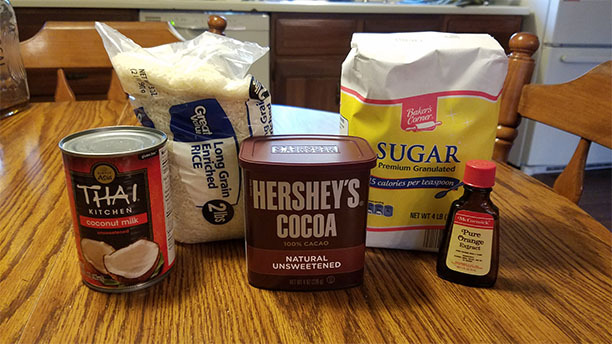
Materials
  • 5 small cup of rice (Aleisa)
  • 6 small full cup of sugar (suta)
  • Cups of water (how many u want) vai
  • Half of the small samoa coco (ToTo)
  • 5 tea leaves (Lau ti), (Big leaves)


Instructions
  1.  First, use a small pot to measure the rice with
the cold water. Wait for a while until the rice
gets cooked or when the water is gone.

Mea muamua, faoga o se ulo leikiki e fua ai o
le aleisa ma le vai. Faatali sei vela o le aleisa.


  1. Pour the rice in a larger pot to make a huge
rice pudding.
Ku’u i kokogu o le aleisa i se ulo lapo’a
e fai ai o le koko aleisa.


  1. Put in half of the samoan coco , stir to
split the coco apart. If you don’t have any
saoman coco then you might find it at the
supermarket.

Afa o le koko samoa ae kogi i kokogu, 
Afai e leai sou koko samoa, e maua i le
makeki.


  1. Once the coco is splitted, throw in six cups
of sugar ( if it is not sweet enough then put
in more sugar until it is sweet enough for your
yourself ).

A uma loa ga makalakala i le koko, kogi
kokogu ia g ipu suka i kokogu o  le ulo.
  
  1. Grab 5 big tea leaves and throw it in the pot.
Kau mai gi laumoli ae kogi i kokogu o le ulo.


  1. Mix everything that is in the pot. You will
end up with a very delicious smell, it will
also look black or brown because of the
colour from the coco.

Mix uma mea uma lae kokogu o le ulo.
A kakala o le kapugi o le ulo, e lagu ululi.
O le koko e ululi.


Warning!
DO NOT EAT THE TEA LEAVES IN THE POT!!